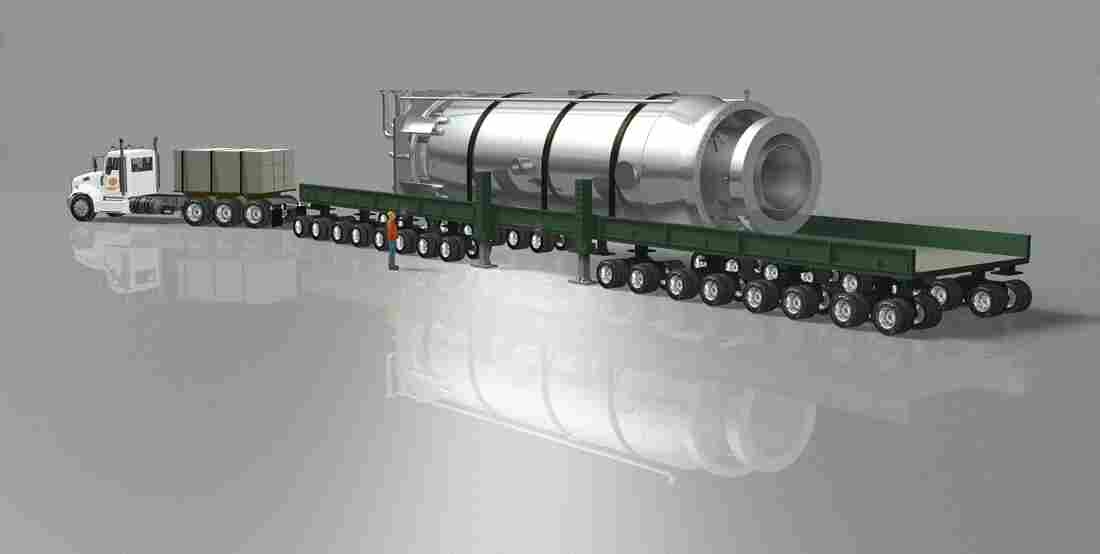
NuScale energy needs to construct modular nuclear reactors sufficiently small to suit on the again of a truck. NuScale conceal caption

NuScale energy needs to construct modular nuclear reactors sufficiently small to suit on the again of a truck.
NuScaleNuclear energy vegetation are sometimes hulking buildings made utilizing billions of of concrete and metal. However one firm thinks that by going smaller, they may really make nuclear energy extra reasonably priced.
NuScale Energy primarily based in Portland, Ore., has submitted a design for what it describes as a "modular" nuclear energy plant. Every module is a self-contained 50-megawatt nuclear reactor loaded with normal uranium reactor gas. Modules can be assembled at a factory-like facility after which delivered to energy utilities and different shoppers.
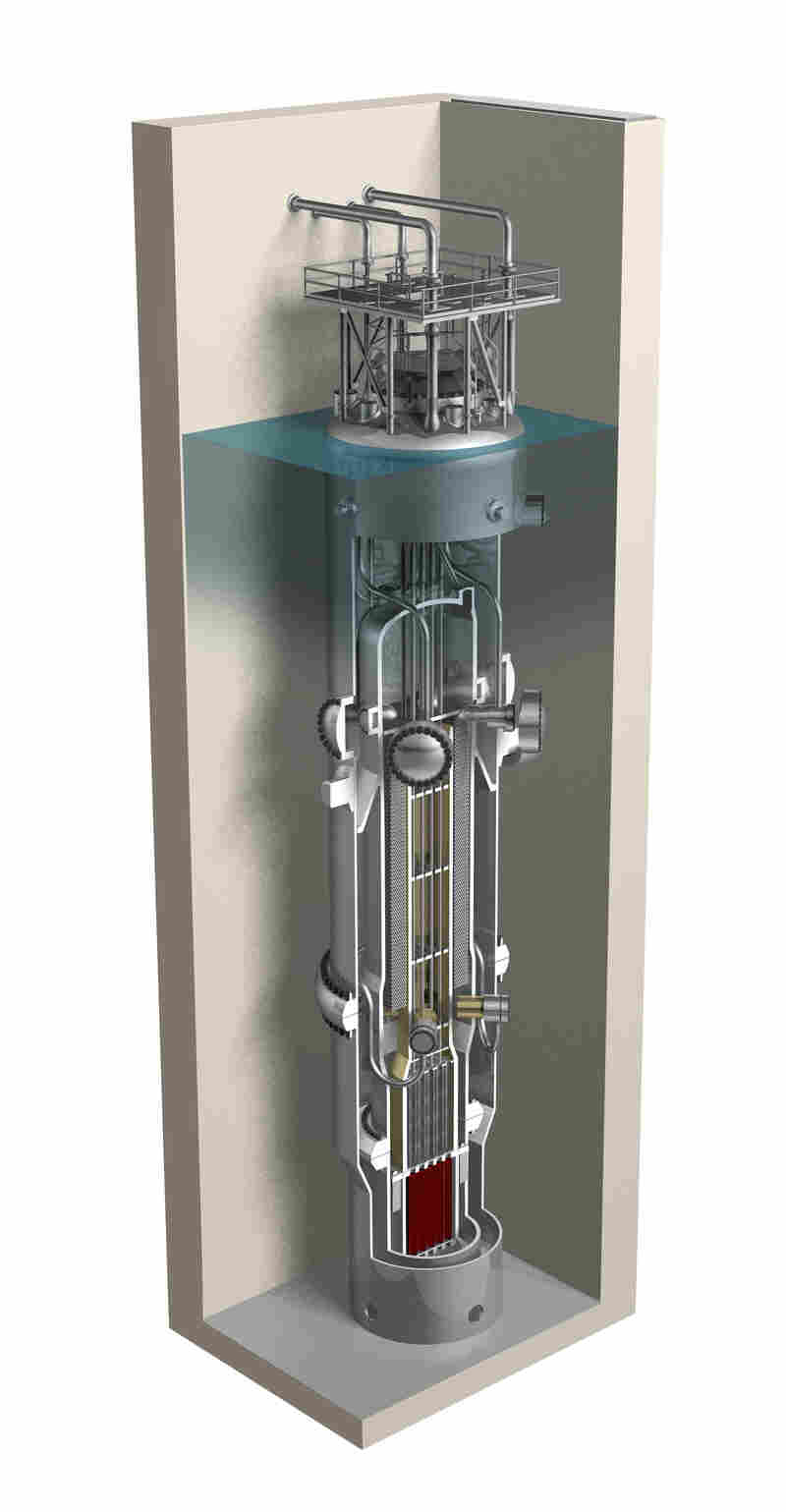
NuScale says the uranium gas in every of its modules can be housed in a particular containment vessel that may be submerged in a pool of water, an added security function. NuScale conceal caption
"Miniature" in nuclear phrases continues to be fairly massive. The modules are sufficiently small to suit on flat-bed vans, however they might stand practically 9 tales tall. Furthermore, an influence plant would in all probability require a number of modules hooked collectively like large batteries. After all, they'd have to be operated by skilled nuclear engineers.
However the design — a radical departure from different nuclear vegetation — would even have benefits.
Every module makes use of much less uranium gas, making a large-scale meltdown far much less possible. The gas can be housed in a particular containment vessel that may be submerged in a pool of water, an added security function. And reasonably than utilizing pumps of the type that failed throughout the Fukushima nuclear catastrophe, the reactor would flow into the water utilizing pure convection. The corporate maintains the design is less complicated and safer than present reactors.
NuScale formally accomplished its design submission to the Nuclear Regulatory Fee on Thursday. The 12,000-page utility will now endure a prolonged evaluation by the NRC, which should approve the design earlier than development can start.
NuScale says its mass-produced reactor modules will likely be easier and extra reasonably priced to construct than an enormous plant. Inserting a number of modules in a single location will present the identical energy output as a business reactor, says Mike McGough, the corporate's chief business officer. NuScale is already partnering with a consortium of Utah utilities to construct a 12-module energy plant on land in Idaho owned by the U.S. Division of Power. (The DOE is a associate within the NuScale venture.)
The corporate believes that 570-MW venture might be accomplished for lower than $three billion. By comparability, a brand new 1,150-MW reactor at Watts Bar in Tennessee value round $four.7 billion and started operation in 2016 after years of delays.
McGough says the corporate envisions the modules additionally might be utilized in different methods. For instance, he says, they might be put in close to wind generators as backup when the wind is not blowing. Or they might be utilized by the navy to energy bases that want electrical energy even when the grid goes down. A couple of dozen shoppers within the U.S. and overseas are trying on the expertise, he says.
However not everyone seems to be satisfied smaller is healthier.
Ed Lyman, an analyst with the Union of Involved Scientists, says the electrical energy generated by a smaller reactor is dearer than that generated by a bigger one. Firms corresponding to NuScale hope to offset the upper prices by saving on the price of development, however Lyman is not satisfied. He worries financial savings will come at the price of security.
He says NuScale needs to do issues like scale back the scale and power of the reactor containment constructing and the variety of personnel wanted to function the plant. "NuScale is proposing main reductions in all of those areas relative to present NRC necessities for giant reactors, primarily based on the assertion that the reactor will likely be safer," he says.
"We have eradicated a lot of programs that aren't required to guard the core of our plant," McGough acknowledges. However he says that is as a result of the small, modular designs are inherently safer than giant reactors. He believes the NRC evaluation will clearly present that the modular designs can meet or exceed present security requirements.
The NRC will take its time to ensure the design meets its security normal. McGough says the evaluation will take over three years. If it wins approval, NuScale hopes to change on its first plant by 2026.


No comments:
Post a Comment