

People have pointed their telescopes towards the heavens, and within the course of they've managed to determine a number of issues concerning the universe.
ESO/B. Tafreshi (twanight.org)Terrorist assaults, hurricanes, a divisive U.S. election, Brexit — 2016 has not been straightforward. With the yr coming to an finish, we thought it was time to get some severe perspective — from the size of the whole universe.
We're tackling massive questions: what scientists know, and what they've but to be taught.
So earlier than you ring in one other yr, take a second to ponder the billions of years that led to 2017 and the billions extra but to come back.
The place did the universe come from?
"That occurs to be my absolute favourite query," says Chuck Bennett, an astrophysicist at Johns Hopkins College.
He factors out that the big-bang idea says the universe began out dense and scorching, and that it has been increasing and cooling for 13.eight billion years, however, he says, "the big-bang idea does not really say what occurred proper firstly."
You possibly can comply with our legal guidelines of physics again in time, he says, however they break down near the beginning, when issues have been unspeakably fiery and shut collectively. Nonetheless, there could also be clues from the bizarre world of quantum physics. In that world, unusual stuff can occur, like particles can simply seem out of nowhere.
"Even if you happen to take one thing that is an entire vacuum, you've got gotten the entire particles and mud and all the pieces out of the best way, in quantum mechanics you continue to have particles popping out and in of existence on a regular basis," explains Bennett.
So perhaps the kernel that turned our universe simply randomly and spontaneously appeared. "It appears weird, however that's sort of the going fascinated with this," Bennett says.
And if you wish to take into consideration one thing much more weird, take into account this level made by Caltech theoretical physicist Sean Carroll. If the large bang was the primary second in time, that creates a conundrum: "There is no verbs earlier than time itself exists, proper? There is no popping into existence, there is not any fluctuating, there is not any quantum mechanical craziness, there may be actually nothing," says Carroll.
Is the universe infinite?
You could be tempted to attempt to reply this query by stepping outdoors the universe so you may take a gander. However, clearly, that is inconceivable. "There isn't a such factor as outdoors the universe, so far as we will inform," says Carroll.

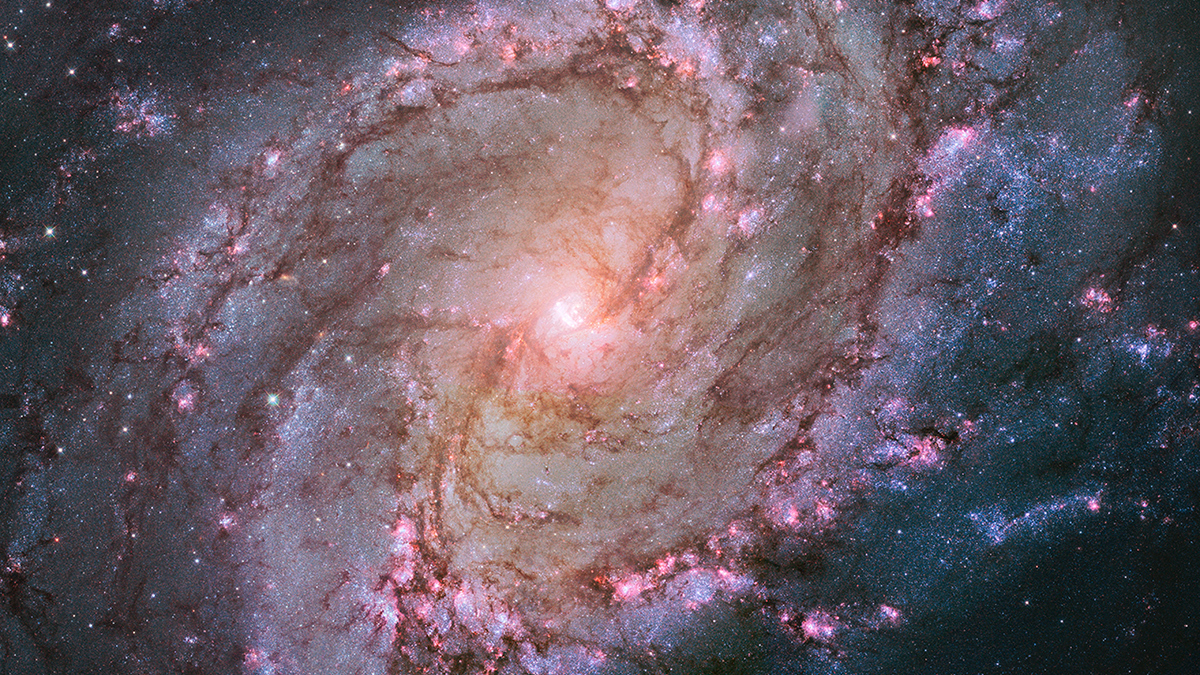
Despite the fact that the universe has been increasing for about 14 billion years, that does not imply it is ballooning out into another realm. "I do know it is troublesome to wrap our minds round," says Carroll, "nevertheless it's simply getting increasingly more of it, regardless that it is not increasing into something in any respect."
So if we will not depart the universe, all we will do is go searching inside. For example you flew off the Earth, out of our photo voltaic system, out of the Milky Method galaxy, out of our cluster of galaxies, and flew on and on. How far might you go?
"We do not 100 p.c know," says Janna Levin, a theoretical physicist at Columbia College. "What we see of the universe is huge. We all know that the universe is one thing like 90 billion light-years throughout." However that is simply the half we will see.
Something past that has to stay a thriller, as a result of stuff out there may be so far-off, its mild won't ever be capable to attain us. "It makes logical sense to imagine the universe goes on past that boundary. It will be sort of magical if we have been simply occurring to have the ability to see proper to some boundary after which one thing loopy occurred past that, like galaxies ceased to exist," says Levin. "I imply, that simply appears nuts."
So the universe goes on, however is it infinite? "It's considerably unimaginable however fairly attainable that our universe merely goes on perpetually," says Bennett.
To us, the universe appears flat, so perhaps it is like an limitless sheet of paper. However then again, folks used to suppose the Earth was flat, too, as a result of folks noticed flat land stretching to a horizon, past which they might not see. Lately, the thought of a flat Earth appears foolish — we all know it is actually an enormous sphere.
"Our universe could be like that," says Bennett, noting that the universe could be curved and would possibly even curve again on itself like a sphere, "however on a scale that's really huge."
If that's the case, and also you headed off into the universe, going straight in a single course, you'd ultimately end up proper again the place you began.
What's the universe manufactured from?
You would possibly suppose this is without doubt one of the simpler questions concerning the universe to reply. However you'd be flawed. "All of the stuff we have ever seen within the laboratory, all of the sorts of particles and matter and power, that solely makes up 5 p.c of our universe," says Carroll.
5 p.c! So what's the remainder of the universe manufactured from? Effectively, one biggie is one thing referred to as darkish matter. About 25 p.c of the universe is darkish matter, which is sort of actually darkish. "It simply does not work together with mild in any respect," says Bennett. "It does not give off any mild; it does not take in mild; it does not scatter mild; there is not any method to see it. The one approach we all know that it is there may be as a result of it has gravitational results."
Scientists found darkish matter once they seemed on the movement of galaxies and realized that one thing unseen needed to be exerting a gravitational pull. Darkish matter could also be some sort of particle that we simply have not detected but.
The remainder of the universe — 70 p.c — is one thing much more loopy, referred to as darkish power. It seems to be some sort of power that is inherent to empty area, and it acts to push the universe aside, dashing up its growth. Like darkish matter, darkish power is one other massive thriller.


"Aside from the truth that we do not fairly perceive 95 p.c of the universe, we're doing very well," jokes Bennett.
All the world's main theoreticians, who write complete books concerning the universe, simply should reside with this state of affairs. "You are entitled to say, if you happen to're so good, why do not you inform me what that darkish matter is? And I am going to should confess I do not know," says Jim Peebles, Albert Einstein professor of science, emeritus and professor of physics, emeritus at Princeton College.
He is not depressed, nevertheless, that a lot of the universe stays unknown. "I feel I would be depressed if all the pieces have been almost all identified," says Peebles, "however I do not really feel any hazard of that taking place."
Is our universe the one one?
Let's face it; folks are usually fairly self-centered. "If you happen to look again on the historical past of astronomy, you already know, we used to suppose that the Earth was the middle of the photo voltaic system. Every little thing was about us," says Bennett.
Even after we discovered that Earth went across the solar, and the solar was a part of the Milky Method galaxy, we thought our galaxy was the middle of the universe. "Then we realized no, it is only one galaxy out of tons of of billions of galaxies on the market," he notes.
With that monitor file in thoughts, it is pure to wonder if our complete universe is not so particular — if it is only one amongst many. "We do not know but," says Bennett, "nevertheless it's very attainable."
Provided that scientists consider the seed that began our universe might have spontaneously popped into existence by means of a sort of quantum weirdness, that presents an apparent query: If that might occur as soon as, why no more than as soon as? "So then you could have this sort of array of universes through which ours will not be distinctive," says Bennett.
What number of universes might there be?
"A extremely, actually massive quantity," says Carroll.
However since all the pieces we will observe and poke and prod is, by definition, a part of our universe, it is unclear how we might ever detect another universe. For this reason some thinkers fear that pondering the so-called multiverse is extra like philosophy than science. It is kind of enjoyable to consider whether or not our universe is solitary, and it is a authentic query, says Peebles, "however since we'll by no means be capable to reply it, I am unable to get very excited."
However perhaps this concept may very well be testable. Think about if you happen to had two universes that have been increasing and bumped into one another, says Bennett. If one other universe ran into ours, there may very well be methods to inform. In truth, there have been efforts to look the skies for proof of that sort of impression, however there is not any signal it ever occurred. Which could be an excellent factor, since that sort of occasion "can be very harmful not less than for folks in one of many universes or the opposite as a result of considered one of them would most likely be destroyed," Bennett says.
How will the universe finish?
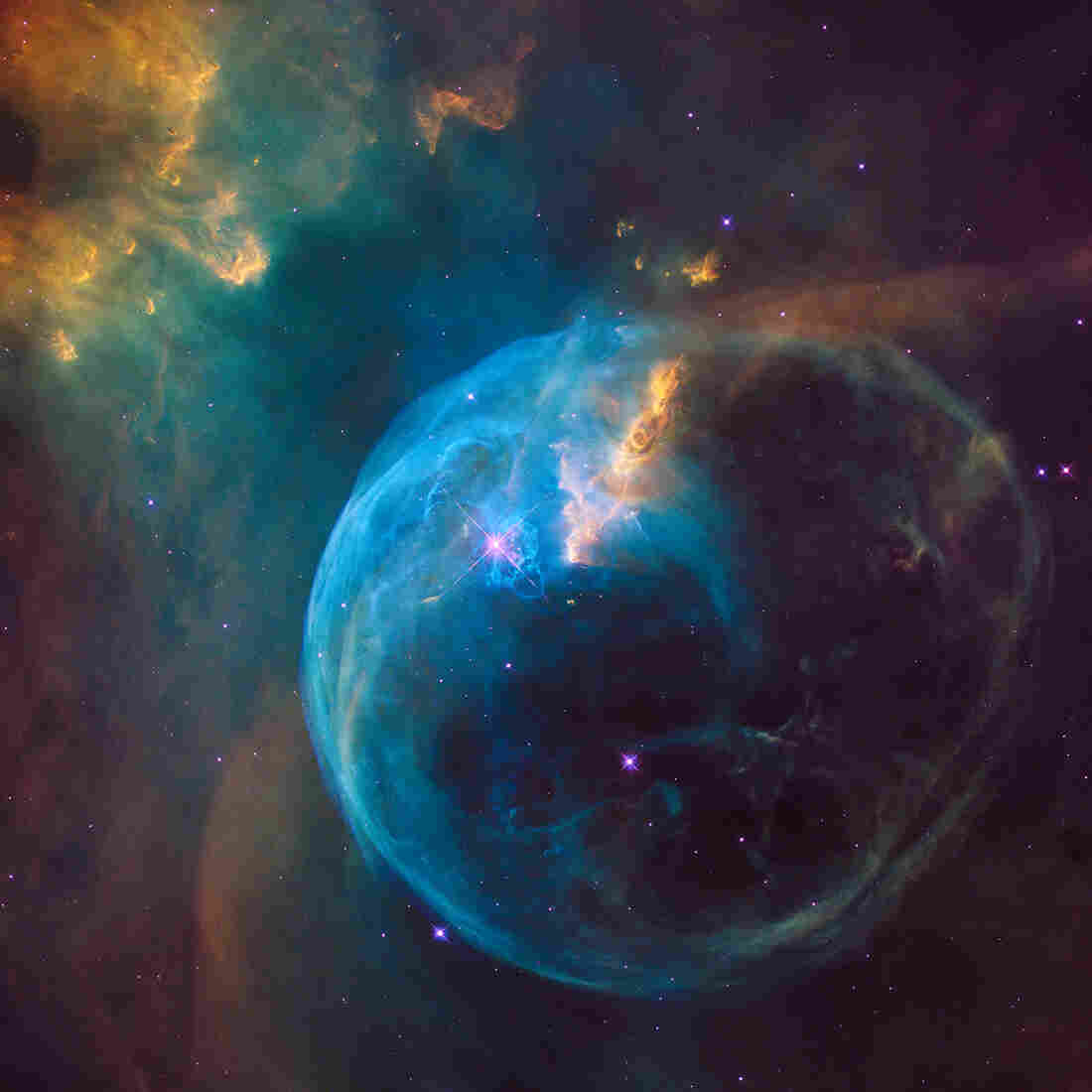
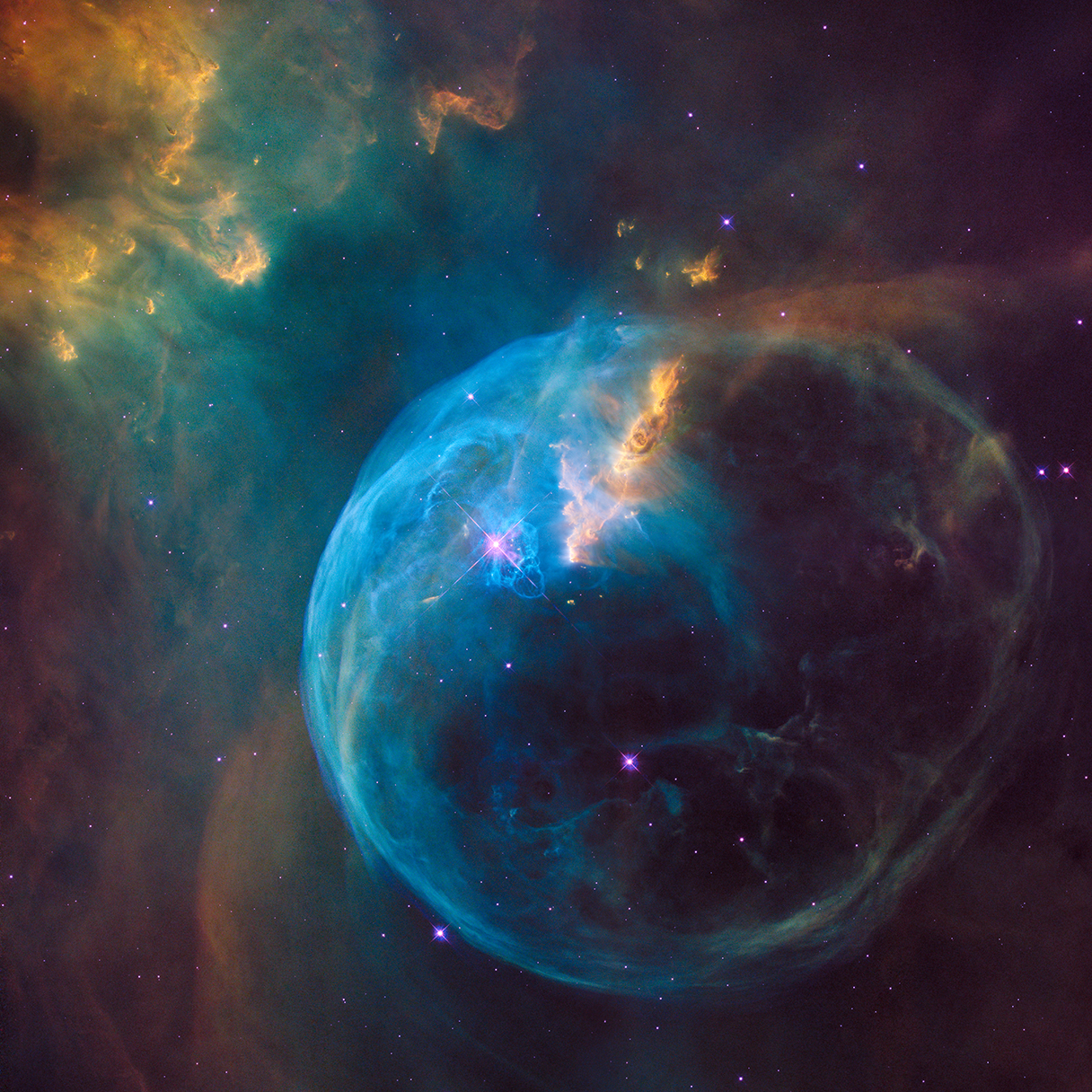
"Some say the world will finish in hearth, some say in ice," wrote Robert Frost in his well-known poem Hearth and Ice. He favored hearth however, hedging his wager, added that:
I feel I do know sufficient of hate
To say that for destruction ice
Can be nice
And would suffice.
Lately, most astrophysicists are guessing the universe will finish as chilly as ice.
The universe, which began out scorching and dense, has been increasing and cooling for almost 14 billion years. We now know it is really increasing sooner and sooner. "That is like hyperdrive on the cooling," says Bennett. "So it is the ice answer. Every little thing would develop dimmer and dimmer; you'd cease seeing issues within the sky; all the pieces would develop darkish and chilly."
As all the pieces will get farther and farther aside, every particle of the universe will ultimately find yourself fully alone. All of it sounds bleak.
However, cheer up! Ending with hearth remains to be attainable.
Since darkish power is pushing the universe to broaden sooner and sooner, and physicists do not know what darkish power is, it is attainable that it would simply decay or go away, making our increasing universe decelerate. "Perhaps even reverse its course for all we all know, after which what? Then we return to sort of a fiery finish," says Levin. She explains that all the pieces would fly again collectively towards an enormous crunch, which is like the large bang occurring in reverse.
Hearth or ice, both approach, the top is coming. However not for a protracted whereas. "We expect it will likely be not less than a quadrillion years earlier than the final star burns out," says Carroll, noting that that is 1,000 trillion years.
Our personal solar will burn out approach sooner, in about 5 billion years. Although Carroll says that is sort of a parochial concern, when you think about that our Milky Method galaxy has round 100 billion stars and is only one of trillions of galaxies.
"So we aren't vital on the cosmic scale. We aren't necessary to the universe. That is the dangerous information," says Carroll. The excellent news is that, even with our puny brains, we have managed to determine that out.


No comments:
Post a Comment