
African runner peanuts have been as soon as a defining taste of the South, memorialized in songs, peanut fritters, peanut soup and in Charleston's signature sweet, the peanut-and-molasses groundnut cake. However by the 1930s the nuts had all however disappeared. Courtesy of Brian Ward disguise caption

African runner peanuts have been as soon as a defining taste of the South, memorialized in songs, peanut fritters, peanut soup and in Charleston's signature sweet, the peanut-and-molasses groundnut cake. However by the 1930s the nuts had all however disappeared.
Courtesy of Brian WardA tiny pink peanut isn't a white rhinoceros. Neither is it a inexperienced turtle or a Bengal tiger. However till a number of years in the past the Carolina African runner peanut — at one time, the South's most praised peanut, filled with taste and wealthy with oil — was very like the rhinoceros and turtle and tiger. That's, it was practically extinct.
The Carolina African runner, like many heirloom cultivars of the South, was first delivered to America within the 1600s by enslaved West Africans, who grew it of their yard gardens. It was the South's ancestral nut, memorialized in songs, peanut fritters, peanut soup and in Charleston's signature sweet, the peanut-and-molasses groundnut cake. Based on stories from the period, distributors of groundnut muffins would go all the way down to the town's wharves when casks of molasses have been being unloaded, scraping it as much as boil for the muffins, then including butter, egg white, parched peanuts and lemon peel. They have been offered for a penny by free black girls known as "maumas" sitting on three-legged stools from daybreak to nightfall. All of the groundnut maumas have been shut down as a part of native sanitation efforts, together with the World Battle 1 sanitation initiatives set forth by Herbert Hoover.

Chloe Jenkins (1843-1899), photographed in Charleston circa 1897, was a so-called "mauma," a free black lady who offered the town's signature groundnut muffins for a penny every. Courtesy David Shields disguise caption

Chloe Jenkins (1843-1899), photographed in Charleston circa 1897, was a so-called "mauma," a free black lady who offered the town's signature groundnut muffins for a penny every.
Courtesy David ShieldsBy the Nice Despair, the nut had practically vanished — displaced by bigger and extra common Spanish and Virginia peanuts. (Virginia peanuts have been introduced over from Bolivia within the 1840s.) A mere 40 seeds survived, tucked away by plant breeders within the 1930s in a cold-storage seed vault at North Carolina State College.
Now, the Carolina African runner peanut is again from the brink.
The primary industrial crop of 15 million peanuts was harvested this previous November — slated for cooks, artisanal peanut butter makers, and cold-pressed peanut oil.
"The peanut," says chef Forrest Parker, appointed a 2016 South Carolina Chef Ambassador, "is small to the purpose of being diminutive, however when roasted has essentially the most intense peanut taste I've ever skilled, and continues to be a revelation each time I style it."

The peanut owes its revival to meals historian David Shields, writer of Southern Provisions. "I had seen of the nut within the Sloane assortment, then within the British Library," remembers Shields, who requested Tom Isleib, a peanut breeder at North Carolina State College, whether or not the college had a Carolina runner in its assortment. "They'd preserved the seed, however it was simply known as [Carolina] No. four," Shields remembers.
Quickly, horticulturist Brian Ward of Clemson College's Coastal Analysis and Training Heart, in Charleston, S.C., was entrusted with planting 20 of these 40 remaining seeds. Twelve sprouted. Understanding these 12 have been the dear residing stays of an almost extinct nut, he took particular care. "I grew them proper by my area lab," Ward remembers, "so I used to be principally in a position to watch over all of them day lengthy."
When the peanuts first blossomed in the summertime of 2013, Ward and Shields have been sure they'd recovered the misplaced Carolina runner peanut. It appeared precisely just like the picture.
"We knew the second we noticed the multitude of nuts hanging from their pedicels," says Shields.
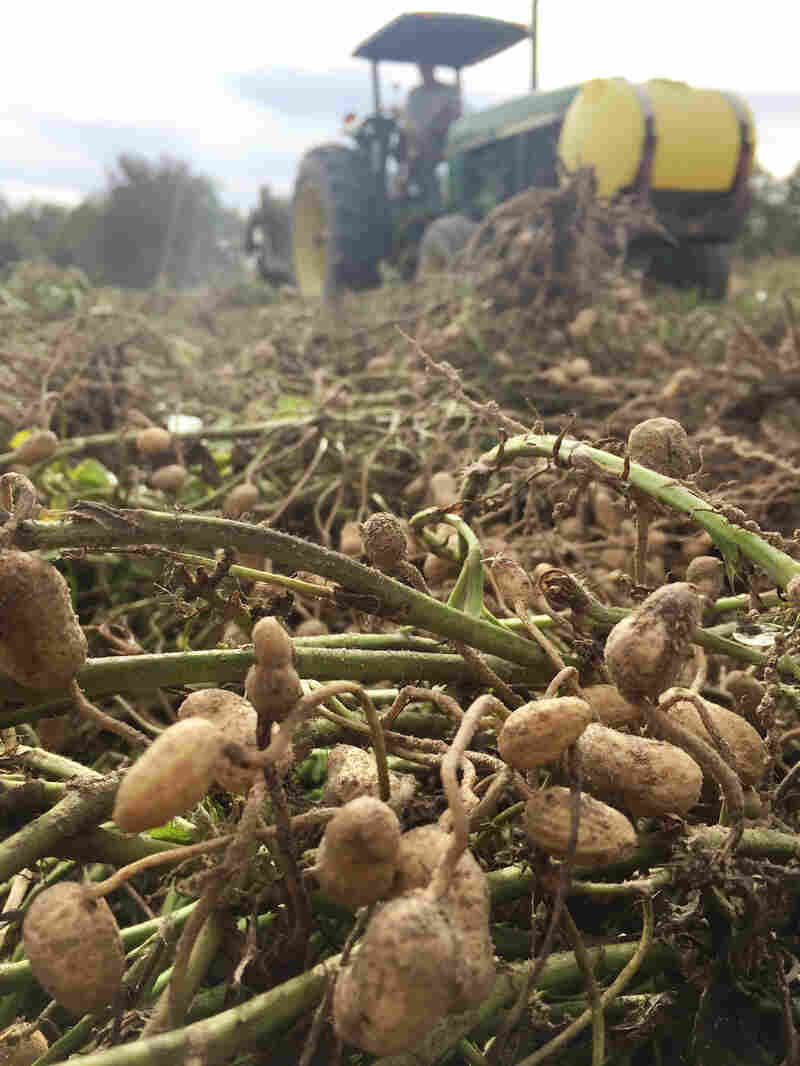
Horticulturalist Brian Ward began out with simply 20 seeds, simply half of what was recognized to exist of the Carolina African runner peanuts. At the moment there are tens of millions of the seeds. Courtesy of Brian Ward disguise caption
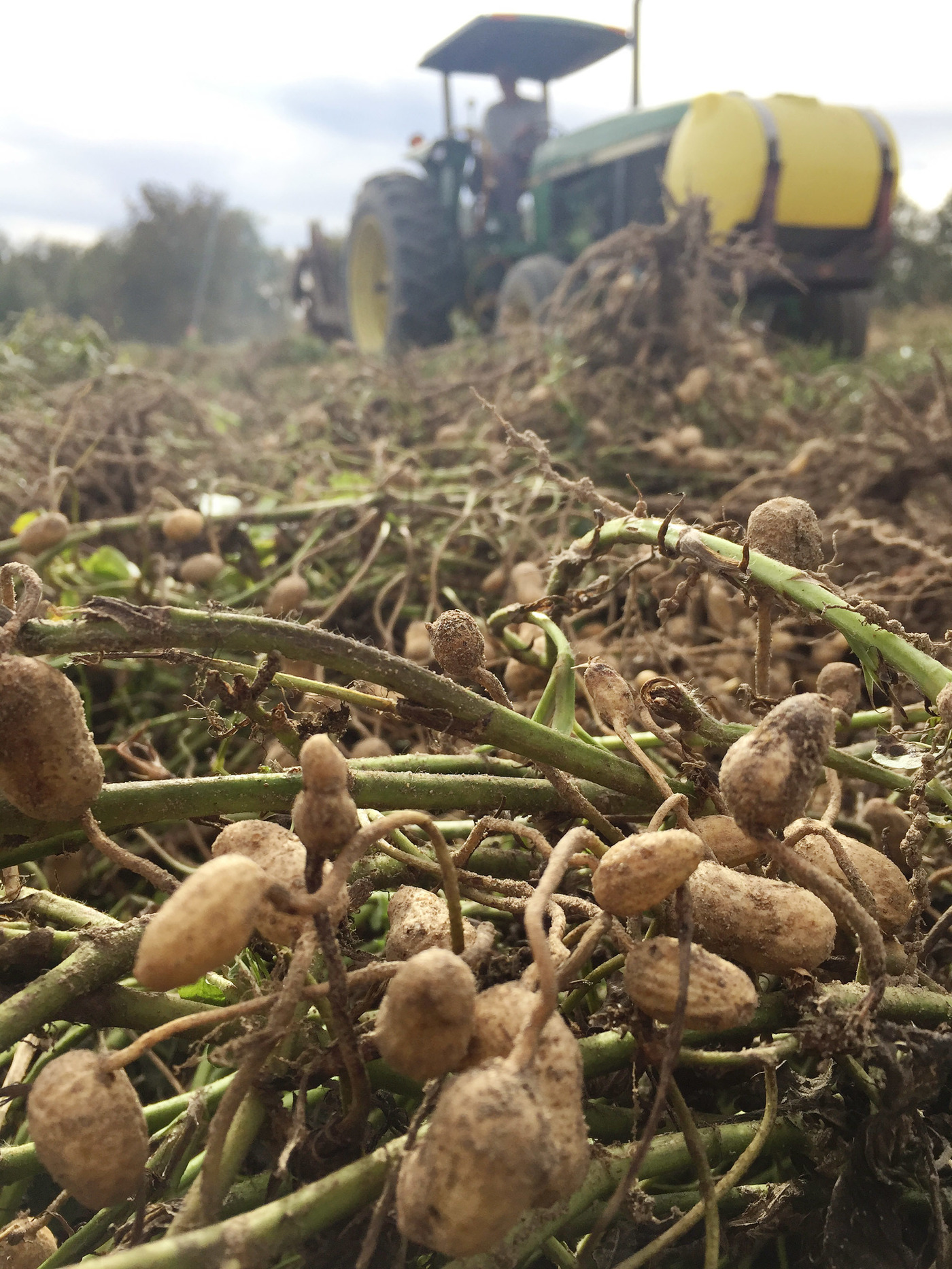
Horticulturalist Brian Ward began out with simply 20 seeds, simply half of what was recognized to exist of the Carolina African runner peanuts. At the moment there are tens of millions of the seeds.
Courtesy of Brian WardThat yr the 12 seeds grew to become 1,200, then 60,000 in 2014, one million in 2015, and this yr, 15 million. About 30 artisanal growers are additionally producing smaller crops in 2016. The mission has been funded by the Carolina Gold Rice Basis, grain purveyor Anson Mills and its founder, Glenn Roberts, and the South Carolina Peanut Board.
Chef Parker says he created a riff on groundnut muffins for a supper elevating funds for ongoing efforts to revive the melting-pot delicacies that when thrived from the Carolinas all the way down to Jacksonville, Fl.
"We used the groundnut cake as an inspiration, however we titled our confection Velvet Elvis. It was roasted banana curd, toasted peanuts, bacon, a discount of scorching sauce and molasses, inside a puff pastry."
This yr, says Parker, he is getting Ziploc gallon luggage of peanuts from panorama architect and heirloom seed grower Nat Bradford of Seneca, S.C., who grew out 1,000 kilos of the peanuts this yr. "The flavour is intense," says Bradford. "It is such as you turned up the amount on a peanut. Even the perfume of the peanut bush is superb."
The peanut's revival comes at a great time for South Carolina growers, who're turning to each Virginia and typical runner peanuts because the crop of the long run. "There is a peanut renaissance happening within the state," says Ward.
In 2003, peanuts have been grown on simply 19,000 acres of South Carolina farmland. At the moment, a number of kinds of peanuts are grown on 110,000 acres, and the heirloom Carolina runner will quickly be added into the combo.
"To suppose that these 40 seeds have been the one viable seeds on the planet," muses Ward. "It is fairly particular to deliver them again."
Jill Neimark is an Atlanta-based author whose work has been featured in Uncover, Scientific American, Science, Nautilus, Aeon, Psychology At the moment and The New York Occasions.


No comments:
Post a Comment